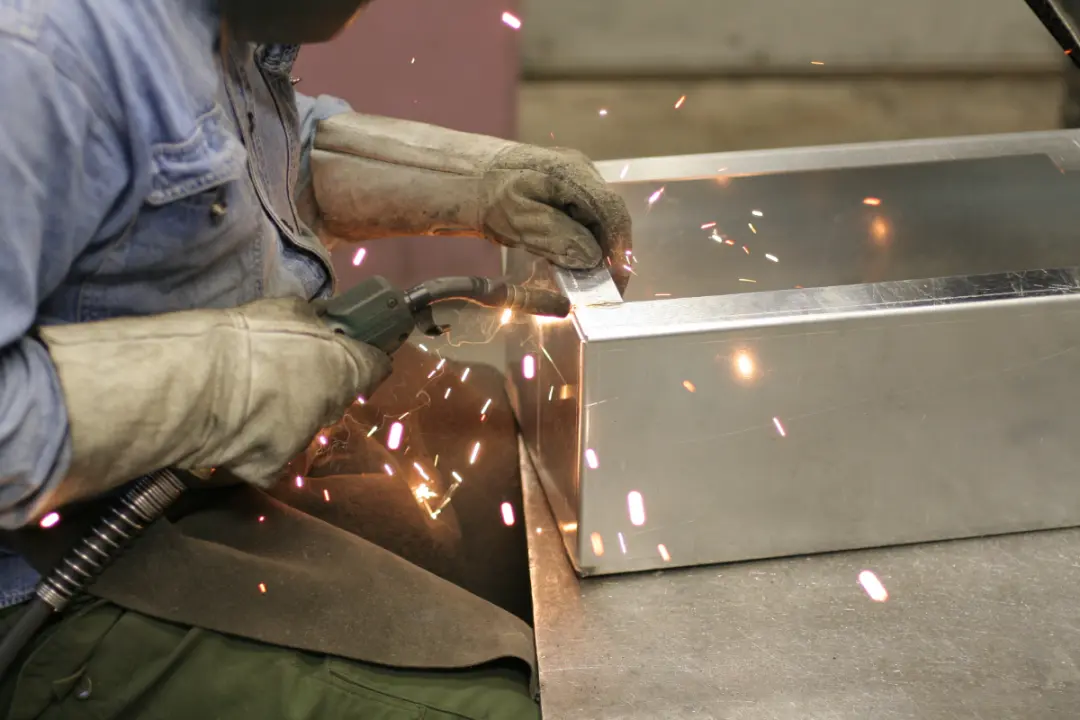

What is architectural welding? It is the joining of metal components to create building features that combine strength, function and a considered finish. Part of architectural metal fabrication, it supports everything from staircases and balustrades to screens, canopies and public art. This guide explains the welding process and the materials, methods and design decisions needed for a successful project.
How Architectural Welding Supports a Building Project
Architectural metalwork brings an architect's design into a manufactured form. In construction, a project may involve load-bearing steel, a decorative metal element or a combination of both. Welding connects prepared components, while the wider metal fabrication process includes measuring, cutting, forming, assembly and applying the final finish.
Architects and builders use a range of materials for architectural applications. Mild steel is a popular choice for strong frames; stainless steel suits exposed handrails; aluminium offers lower weight. Copper, brass and bronze can add colour and character, although their suitability for welding needs separate assessment.
The role of welding varies with the building. A steel staircase needs dependable connections and carefully designed supports, while a metal screen may place more emphasis on appearance. In both applications, fabricators must understand how components will function, where they will be installed and which loads they must resist.
Architectural welding involves fusing prepared metal surfaces with controlled heat. The welding process creates a joint whose strength depends on the materials, preparation and technique. Fabricating an attractive feature therefore means combining design knowledge with the ability to make consistent connections.
Much architectural metal fabrication happens in a workshop, where machinery, access and working conditions can be controlled. Assemblies are then delivered to the site for installation. Deciding which connections need welding and which use bolts is an essential part of project planning, making transport and maintenance easier.

Benefits of Architectural Metalwork
Strength, Durability and Structural Integrity
Structural integrity starts with the design, rather than the visible weld alone. Metal grade, section dimensions, connection details and fixings must work together. For load-bearing structures, engineers establish the requirements and the fabrication team follows the agreed drawings and welding procedures. These factors affect both long-term durability and ease of inspection.
A reliable welding process helps transfer forces between components. Weld length, penetration and the condition of the base material influence performance. A smooth finish can conceal problems, so appearance should never act as the only evidence of quality.
Inspection is critical before the finish is applied. Depending on the project, checks may include dimensions, visual examination and additional weld testing specified by the engineer. Identifying a crack or poor fusion early helps avoid an expensive repair after installation.
Durability also depends on water, salts and wear. Outdoor metal features need suitable corrosion protection, drainage and maintenance. With appropriate design and care, strong, durable metalwork can remain useful for decades; no welding method alone guarantees a fixed service life.
For staircases, handrails and balustrades, strength and safe everyday use matter as much as style. Architects, contractors and fabricators need to agree how each element connects to the building, ensuring that the assembly meets the project specification.
Design Flexibility and Material Choices
Metal fabrication gives designers flexibility in shape, scale and detail. Cutting and forming techniques can create curved panels, slender frames or a repeating pattern, while welding connects those materials into a functional assembly.
The fabrication process may include bending sheet, forming tube, drilling fixing holes and punching openings. Stamping can suit repeated parts, but a one-off project may favour simpler methods. Choosing techniques around the actual quantity helps balance design ambition with the budget.
Material thickness and working position dictate which welding methods are appropriate. Thin materials need careful heat control, while thicker sections may require edge preparation and several weld passes. High precision techniques are valuable where a visible finish or close-fitting connection is needed.
Different metals cannot automatically be welded together. Steel and aluminium, for instance, generally need a specialist transition or a mechanical connection. Soldering is a separate joining process for suitable light metal details; it should not replace a specified structural weld.
Efficiency Without Sacrificing Quality
Good preparation improves efficiency more reliably than rushing the welding process. Accurate drawings, repeatable components and sensible assembly sequences reduce rework. Workshop jigs retain the required position, allowing the welder to focus on consistent welding and making repeated joints easier to produce.
Productivity depends on the whole fabrication workflow. Material handling, cutting accuracy and access affect how quickly jobs progress. MIG welding can offer useful speed for suitable work, while TIG welding may be preferred where precision and the finish justify a slower approach.
Early collaboration helps architects and designers create details that can be manufactured. Agreeing tolerances and finish samples before fabrication starts reduces uncertainty, providing a clearer basis for cost and helping finished components fit together first time.
Equipment and Working Conditions
Welding equipment must suit the metal, thickness and working environment. A suitable power source, torch and consumables are needed, alongside extraction and protective equipment. Electricity supplies and safe access also need to be considered before welding begins.
A welding gun delivers wire and shielding gas during MIG welding. Clamps, positioners and fixtures hold the work steady, while extraction captures fumes near their source. These tools support quality, but equipment selection does not replace a trained operator or a suitable welding procedure.
The workshop should keep materials clean and separate where needed. Tools contaminated by carbon steel can mark stainless steel. Aluminium fabrication also needs suitable preparation, because oxide and contamination can interfere with the welding process.
Choosing a Multi-process Welder
Some welding projects use several methods across one assembly. A multi-process welder can support more than one welding process, but available modes vary. Check the specification instead of assuming that every model offers TIG, MIG and stick welding.
Duty cycle, current range and accessories affect suitability. A machine capable of basic DC TIG may not offer the AC TIG capability commonly used for aluminium. Torch cooling and wire feeding also matter when working with a range of materials.
Plasma cutting is another process with its own equipment requirements. Some machines combine functions, but a welding power source should not be assumed to include plasma capability. Choosing equipment around project needs is more useful than selecting the longest feature list.
Versatility is valuable when it supports the intended applications. The operator still needs to set up each process correctly, choose compatible consumables and assess the results. The machine cannot decide whether a welded connection is suitable for the design.
What Does Architectural Welding Cost?
Architectural welding cost depends on the complete project: material selection, drawing development, fabrication complexity, finish and installation. A simple steel frame and a polished curved handrail may use similar amounts of metal but involve very different labour. A useful quotation explains what is included.
The most economical approach is often to simplify details without losing their function. Standard sections, accessible welds and repeated components can make metal fabrication more cost effective. A robust design still needs practical details. Unusual curves, concealed joints or a demanding finish may add work that is hidden in the assembly.
Compare welding methods in context. MIG welding often provides speed on suitable steel assemblies; TIG welding can reduce finishing work on carefully made visible details. Neither method is automatically cheapest once preparation, weld quality and treatment are taken into account.
Before asking for a price, bring drawings, approximate size, installation location and intended finish. State whether the metal will be exposed to weather or heavy use. Contractors also need information about access, lifting and the sequence of other building work.
A tailored quotation should separate fabrication, finishing and installation where relevant. Discuss lead times, approval stages and changes that could affect the order. This gives clients a clearer understanding of what will be supplied, rather than comparing prices for different products.

Welding for Public Art and Interior Design
Architectural welding supports the creation of sculptures, entrance features and decorative screens. Here, metal becomes a visible design element as well as a functional material. A carefully chosen finish can bring texture, reflection or contrast to an interior design scheme.
Working with copper can create a warm appearance, while brushed stainless steel suits modern interiors. Architects may use aluminium for lighter panels and steel for a substantial frame. Materials should suit the setting and the way people will touch or use the feature.
Public art needs the same practical attention as other outdoor metalwork: stable supports, safe edges and suitable maintenance.
A modern design combines visual style and practical function. Collaboration between artist, engineer and fabrication company helps bring that idea into a buildable form. Welding can create continuous connections, but bolted or other joining methods may be useful where removal or replacement is needed.
For a commercial reception or residential staircase, samples can help achieve a consistent finish before full fabrication. The sample should show the actual material, weld treatment and texture, providing a better guide than a photograph alone.
Three practical applications show how material and finish choices change with the brief:
Structural Feature
Steel Staircases
Strength and Safe Use
Decorative Feature
Metal Screens
Light, Pattern and Privacy
Interior Feature
Handrails and Balustrades precision detailing and a consistent finish
Comfort and Everyday Function
MIG Welding: Fast Joining for Suitable Assemblies
MIG means metal inert gas. In this arc welding process, a wire electrode is continuously fed through the torch. The arc supplies heat to melt the wire and workpiece edges, creating molten metal that solidifies into a connection. Shielding gas protects the weld pool from the surrounding air.
MIG uses inert gases such as argon or helium, including suitable mixtures. Welding steel with an active gas containing carbon dioxide is technically MAG, although workshops often use MIG more broadly. Gas and filler metal must match the materials and procedure.
MIG/MAG is a common method for workshop fabrication because continuous wire feeding supports efficient welding. It is versatile across a range of applications, but wind can disturb the gas shield in outdoor environments. Spatter and access affect the finish. There is no single most common method that suits every architectural project.
TIG Welding: Precision for Visible Metal Details
TIG welding uses a non-consumable tungsten electrode to maintain an electric arc. The arc can melt the base metal while separate filler material is added by hand when required. TIG welding is useful for thin sheet and detailed components where close control is important.
TIG is renowned for neat results in skilled hands, making it an ideal option for some visible details. However, precision comes with slower deposition rates. TIG welding is typically more labour-intensive than wire-fed welding, so choosing TIG should reflect finish and connection requirements.
Neither TIG nor MIG removes the need for finishing. A handrail may still need blending or polishing to match adjoining metal. Establish whether the weld should remain visible or be dressed flush, and specify that finish before fabrication starts.
Stick Welding and Other Arc Welding Methods
Among the most common types used in general metal fabrication are MIG/MAG, TIG and manual metal arc welding. The latter, also called stick welding, uses a flux-coated electrode. Its coating generates protective gases and a slag layer; the electrode melts as the weld is formed, and slag must be removed between passes.
These common types have different strengths. Manual metal arc equipment is portable and can suit some installation or repair applications. Welding in a horizontal, vertical or overhead position requires appropriate techniques and consumables. Assess working position and access before selecting a method.
Not all welding involves making the parent metals melt. Solid-state joining methods work differently from fusion techniques, which use heat to melt the connection area. For architectural work, understanding the specified method matters more than assuming every connection uses the same process.
Choosing Steel, Aluminium and Copper for the Design
Material selection is a key decision in architectural projects. Steel provides a broad range of sections and useful strength, while aluminium can reduce weight. Stainless steel offers corrosion resistance, but its grade must suit the environment. A corrosion resistant material still needs suitable detailing and care.
Copper is valued for colour and the patina it develops. Copper also conducts heat readily, so welding techniques must account for that behaviour. Copper alloys need separate assessment; a method suitable for one alloy may be unsuitable for another. Decorative iron details likewise need material identification before repair welding.
Aluminium fabrication must consider alloy, temper and the effect of welding on local properties. Its protective oxide layer does not make every application maintenance-free. Connecting aluminium to other metals can create galvanic corrosion when moisture is present, so isolation and drainage may be needed.
Powder Coating, Paint and Corrosion Resistance
The finish affects appearance and durability. Powder coating applies a dry powder that is cured into a coating; success depends on preparation and a system suitable for the exposure. Powder coating alone should not be assumed to provide adequate corrosion resistance for every exterior steel feature.
A suitable paint system or galvanising may be specified instead, or used as part of a combined system. Galvanising provides a zinc coating that protects steel. For aggressive locations, agree the corrosion strategy before fabrication, including weld treatment, drainage and repair of damaged finish.
Drain and vent holes, accessible fixings and smooth transitions make maintenance easier. Applying coatings over poorly prepared welds can lead to early deterioration. Check samples against neighbouring materials, ensuring colour, sheen and texture meet the brief.
Current Metal Industry Figures and Your Project
The World Steel Association's World Steel in Figures 2026 reports global crude steel production of 1,848.9 million tonnes in 2025, including 2.6 million tonnes in the United Kingdom. These figures show the scale of the supply chain; they do not measure architectural welding demand or predict your project price.
The same 2026 publication reports 2024 global industry greenhouse gas emissions intensity of 2.18 tonnes of CO2 equivalent per tonne of crude steel. This industry indicator is not the footprint of an individual fabricated product. Ask suppliers for product-specific environmental data when comparing materials for a building.
The International Aluminium Institute currently reports that recycling aluminium saves about 95% of the energy needed for primary production; its published comparison uses 2019 energy data. This is not a new 2026 measurement. Specify traceable materials and plan how components can be recovered at the end of their life.
From Design Approval to Installation
Agree the intended use, dimensions and finish first. A survey establishes how manufactured parts meet the building. Drawings should show interfaces and fixings, while the fabrication plan sets out cutting, bending, forming and welding in a sensible sequence.
For example, a staircase project may use a steel frame with separately finished handrails. Trial assembly can check alignment before coating. Making allowances for access and transport reduces damage, ensuring components fit without unnecessary installation adjustments.
Understanding maintenance is another essential aspect of the brief. Ask which products to use for cleaning, how often exposed areas need checks and how to repair the finish. A great-looking feature should offer practical long-term value, providing safe use beyond its first impression.
Resolve questions about specification before fabrication. Working with an experienced fabricator helps find an option that meets project priorities. Understanding each process makes it easier to choose materials and techniques that offer the right balance of quality, cost and durability. The fabricator's experience helps judge which details are ideal for the materials, ensuring the product remains suited to its setting.
Sources and Further Reading
Figures checked in October 2026. Sources identify the publication and measurement years; recycling energy savings do not describe the energy used by a welding machine. TWI provides further technical explanations of the welding methods described here.
World Steel Association: World Steel in Figures 2026
Planning Your Next Architectural Welding Project?
For architectural welding and bespoke metal fabrication in Margate, Broadstairs and surrounding areas, talk to Faraday Fabrications about your next project. Bring drawings or initial ideas so we can discuss the materials, design and finish needed. Follow the link below to find information about our services and start a conversation with the team.